
New patients: welcome to the family
Everything you need for your child’s first visit: what to expect, forms you can finish at home, and how insurance and payment work.
Setting up a great first impression
Helping your child build a good attitude toward the dentist starts before the first visit. Tell them what to expect and explain that the dentist and assistants are there to help. Listen to their concerns and help them understand there’s nothing to be afraid of.
Keep descriptions simple and avoid words that might scare them, like needles or pulling, and encourage older siblings not to tease about the dentist.
Plan about an hour. We reserve quality time with every child so each visit is a positive experience. Our staff will let you know if a specific treatment needs more time.
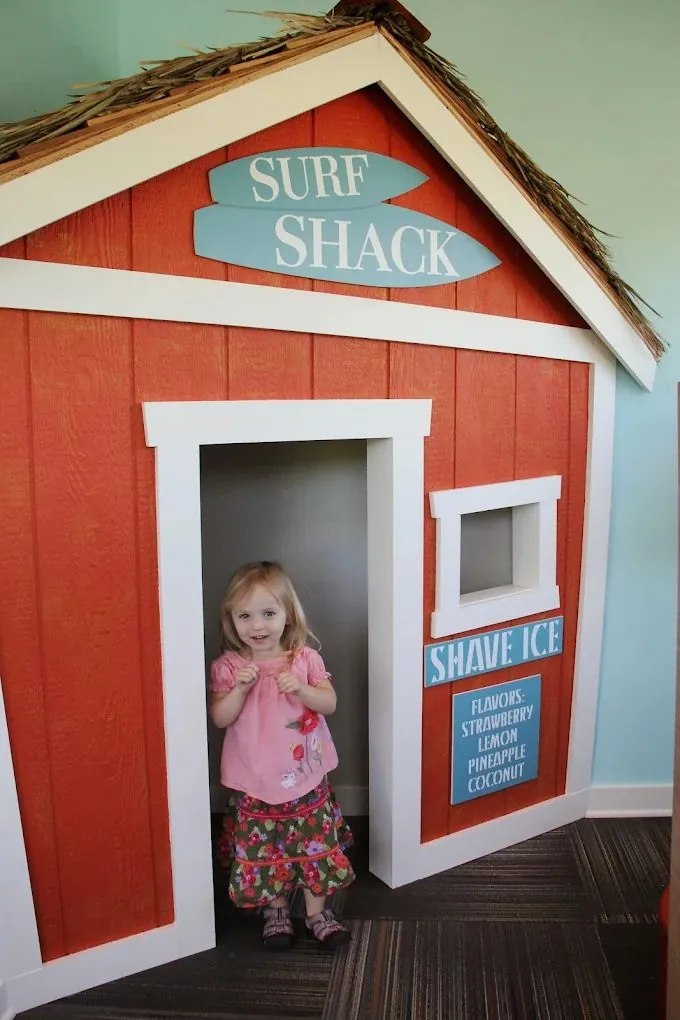
 Say hi to the Surf Shack!
Making visits easy for everyone
Regular visits every six months, starting by your child’s first birthday, help keep teeth strong and catch early signs of trouble.
- Dental visits are part of growing up. Try not to offer rewards or suggest there’s anything to fear.
- The less “fuss,” the better.
- If your child wants to know more, explain that the doctor will look at their teeth to make sure they’re healthy.
- Make sure your child is well rested on the day of the appointment.
- Please don’t threaten a visit to the dentist as a punishment for bad behavior.
- It’s best to tell your child about a dental visit the day of the appointment.
Skip the clipboard: fill it out at home
To make check-in faster, you can complete our Patient Health History Form before your visit. Once you click “submit,” your information goes straight into our system, ready to sign when you arrive.
Have more than one child? Please complete a separate form for each child.
All other forms only need a signature and can be completed in our office.
 Check-in made quick
Clear costs, no surprises
The cost of your child’s treatment depends on their needs and treatment plan. We’ll always discuss costs with you first so you can make the best choice for your family.
- Most insurance plans accepted, including Delta Dental, Premera, Cigna, Assurant, MetLife, United Concordia, Regence/Blue Cross and several others
- Payment is due at the time treatment is provided
- We accept major credit cards, personal checks and cash
- Questions about your plan or bill? Please ask. We’re glad to help
Our office policy on dental insurance
If we have all of your insurance information on the day of the appointment, we’re happy to file your claim for you. Please be familiar with your insurance benefits, because we will collect the estimated amount insurance is not expected to pay. We file all insurance electronically, so your insurance company receives each claim within days of treatment.
You are responsible for any balance on your account after 30 days, whether insurance has paid or not. If your balance isn’t paid within 60 days, a re-billing fee of 1.5% is added each month until paid. If your insurance pays us after you’ve paid, we’ll be glad to send you a refund.
Please understand that we file dental insurance as a courtesy to our patients. We can help estimate your portion of the cost, but we can’t guarantee what your insurance will or won’t pay on a claim.
Understanding your dental benefits
No insurance pays 100% of all procedures
Dental insurance is meant to help with the cost of care. Many patients think their insurance pays 90–100% of all dental fees, but most plans pay between 50% and 80% of the average total fee. The percentage usually depends on how much you or your employer paid for coverage and the type of contract your employer set up with the insurance company.
Benefits are not determined by our office
Sometimes an insurer reimburses at a lower rate than the dentist’s fee and says the fee exceeded its “usual, customary or reasonable” (UCR) amount. Each insurance company sets its own schedule of allowable fees, and these can vary widely between companies and plans. In general, less expensive policies use a lower UCR figure. A lower reimbursement reflects your plan’s benefit level, not an unusual fee.
Deductibles & co-payments must be considered
For example, say the fee for a service is $150 and your insurance allows $150 as its UCR fee. First a deductible (paid by you), on average $50, is subtracted, leaving $100. If the plan pays 80% for that procedure, insurance pays $80, leaving $70 for the patient. If the UCR is less than $150, or your plan pays only 50%, the insurance benefit will be significantly less.

Ready to schedule your child’s visit?
New patients are always welcome. Call us, request a time online, or schedule directly.